Records of processing
The register is linked to the questions and controls that belong to it. Mandatory details are requested during the work, and the software checks whether the register is complete. Art. 30 GDPR
Kaderos GDPR asks operations, legal, controlling and IT independently about their own work. The software compares the answers and shows where the register and reality diverge.
IT knows of 40 systems holding personal data. The records contain 37.
Most organisations have records of processing. They were often drawn up once, by one person, based on what departments reported at the time. New applications, suppliers and ways of working do not find their way in by themselves.
The register is linked to the questions and controls that belong to it. Mandatory details are requested during the work, and the software checks whether the register is complete. Art. 30 GDPR
The software guards whether an assessment is needed, whether it has been carried out and whether the measures have been followed up. Art. 35 GDPR
The steps and deadlines are defined, so that during an incident it is clear who does what and what has been recorded. Art. 33 GDPR
The data protection officer sees the outcomes of all roles together: what matches, what contradicts and what is open.
Each role receives only questions about its own work, with an explanation at its own level, and does not see the others' answers in advance.
Which data does your department process, for what purpose, and with whom do you share it?
On what legal basis, with which agreements and which retention periods?
Is the registration complete and does the procedure work in practice?
Which systems process personal data and how are they secured?
What IT knows and the register does not, the software finds.
In the baseline assessment the four roles go through the first round of answers. You receive an overview of missing records, contradictory answers and open controls, and a proposal for the order of remedy.
Kaderos supplies the software of RealCob. This is what organisations that work with it say. Translated from Dutch.
Everything I need is in it. I am self-employed and have no time to study legislation. With RealCob I do not have to. The tool shows step by step what I have to do and when. Everything is in plain language, and I find that refreshing.
This software helps you get your GDPR affairs in order in a clear and user-friendly way. By answering questions step by step, you get a clear picture of what is needed to meet the GDPR. The biggest advantage is that after going through the whole process you know for certain that you have arranged everything properly as far as the GDPR is concerned.
I do not need to be an expert to follow the rules. As the owner of a small business I am not a lawyer, but I do have to meet the GDPR and NIS2. RealCob makes it understandable and manageable. In one afternoon I had an overview and a plan of action.
Kaderos supplies the software of RealCob. It was designed by Martin Hiele and John Peters. Together they wrote De AVG Code, a Dutch handbook that decodes privacy law, and they have worked with the GDPR in practice every day for years. Their knowledge is in every question, every document and every piece of advice in the software.
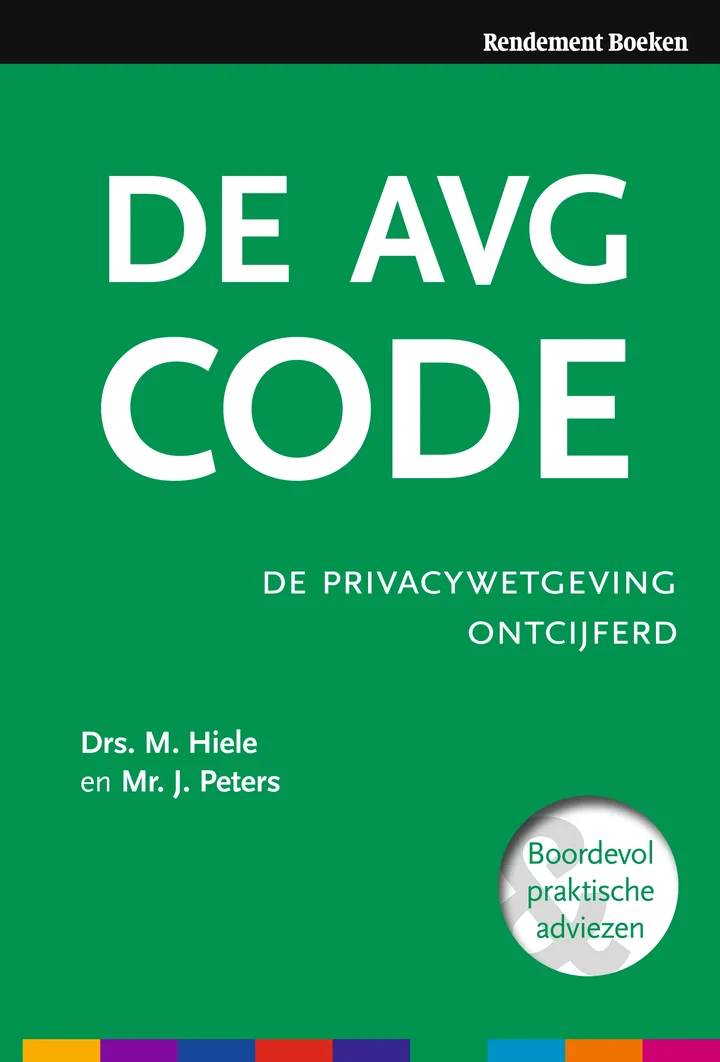
De AVG Code
Privacy law decoded (in Dutch)
M. Hiele and J. Peters
Rendement, March 2024
Your DPO supervises and advises. Kaderos takes over the collecting, asking and comparing, so that the DPO has time for the deviations that matter.
Yes. The explanation with each question is written for employees without a legal background. Whether your organisation has to appoint a DPO depends on your processing activities; you assess that yourself or with an adviser.
That differs per role and per organisation. The demo shows a complete round, so you can estimate it yourself.
Anyone who sells compliance software should be honest about its limits.
Kaderos shows which mandatory controls have been carried out and which are open. Carrying them out remains human work.
Incorrect answers, or data that no role is aware of, may call for additional checks.
Whether and how much time Kaderos saves you is something we establish together in the first period.
In the demo we plant errors in advance and show how Kaderos finds them. You ask your own questions.